Sobek is a god deeply tied to water, in particular, the life-giving Nile River and its floods.
He is also Lord of the Lake, and Lord of the Marshes, presiding over the verdant green of the water’s edge, and all the abundance of life that resides there.
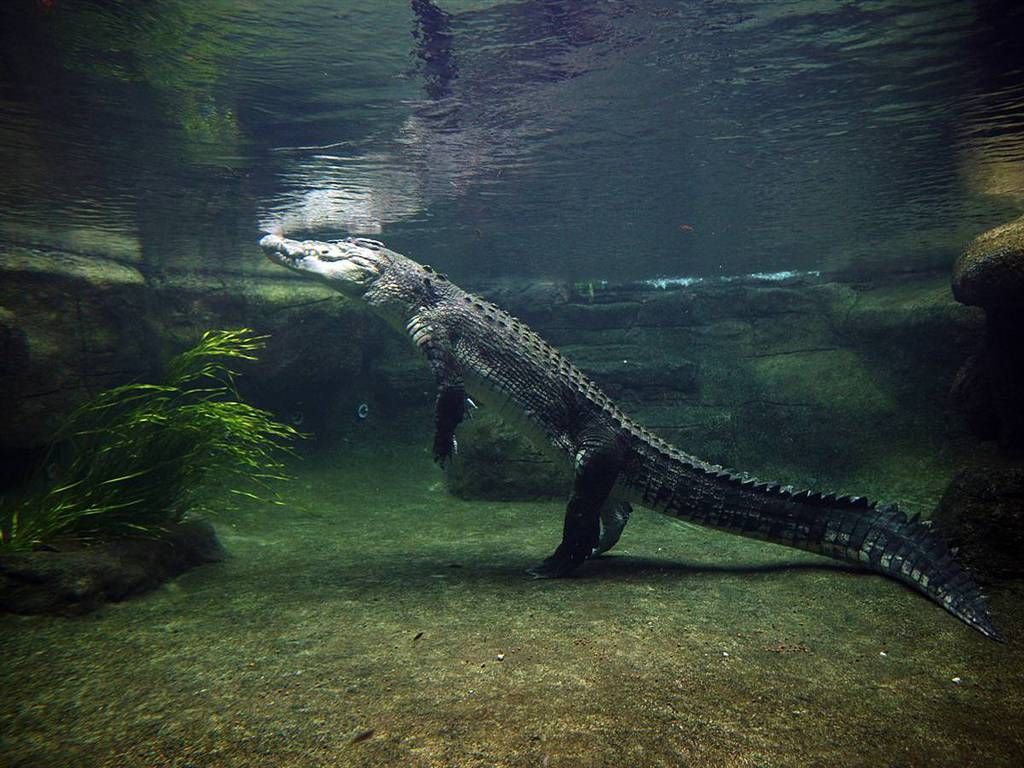
Crocodiles, the bau of Sobek, are fundamentally aquatic animals that thrive in rivers, lakes, and along riverbanks and marshy wetlands, spending much of their time submerged or basking at the water’s edge.
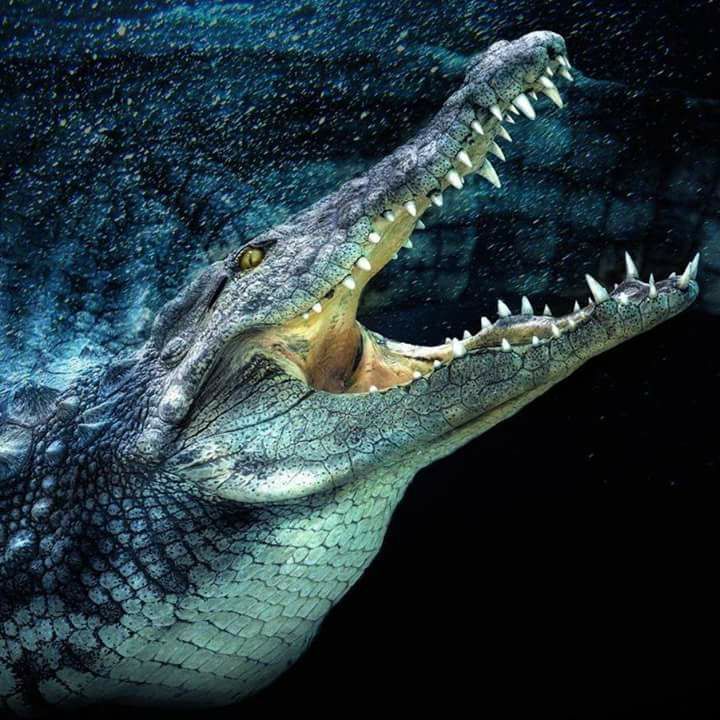
The proliferation of crocodiles in the waterways made Sobek inseparable from the rhythms of the Nile and other bodies of water that were so essential to Egypt itself. Sobek is responsible for the Nile’s inundation, bringing forth fertility and lush growth in a land surrounded by harsh desert, and he could bring or calm its floods.
Sobek is “Lord of Waters”, “Lord of the Flood”, “The One Who Lurks In the Waters”, “He Who Came Out of the Overflow of the Flood”, “Lord of the Inundation”. The water is his domain, of which he is Lord.
Marshes are prime crocodile habitats, verdurous transitional zones between the fertile floodplains and the desert, and Sobek was explicitly and frequently linked to these areas. It also fits with his usual ambiguity and liminality, at the line between civilization and the desert wilds, between order and chaos.
He was born of Neith, identified with Mehet-Weret, the “Great Flood”. From the Pyramid Texts, he is the “ferocious one who emerged from the shank and tail of the Great Radiant One (Neith)” (1).
“Unas emerged from the overflowing flood, Unas is Sobek…Unas came from its streams in the land of the great overflowing flood.” (PT Spell 317)
In the Coffin Texts, the deceased becomes “Sobek, Lord of the Winding Waterways”, as they travel the dangers of the Underworld, taking on the power of Sobek. “I traverse the lakes, I am alert on the shores…I am he who emerges, the lord of water.” (2) He is “lord of the great green” who “eats enemies in his lake”, and “overseer of the marshlands, rich in fish”, his vitality one of aquatic abundance.
Sobek and Fishermen
Those who depended on the river for their livelihood invoked Sobek for protection, safe passage, bountiful catches, and to not get eaten by crocodiles. This included fishermen, boatmen, ferrymen, traders on rivercraft, and those who worked along riverbanks and canals.
Though the initial prayers of protection were likely focused on prayers of, you know, not getting eaten by crocodiles, Sobek quickly evolved into a broader protective deity with apotropaic qualities. He was called a ‘protector of sailors’, guarding travelers and workers from turbulent waters and other hazards, making him important to anyone navigating the waterways.
As Lord of the Waters, it was only natural for fisherman to sacrifice to him to secure good fish harvest, and that the waters remained productive, and did not turn destructive.
Sobek, in fact, was the inventor of the first fish-trap, or net, as told in the Coffin Texts. Ra asks Sobek to retrieve Horus’ severed hands, and Sobek devises a fish-trap, or net, to catch the hands from the water, the text concluding with “That is how the fish-trap came into being.”
In the Handbook of Egyptian Mythology, Pinch positions Sobek as the patron god of fisherman. She also posits that Sobek, as a fish-eater, controlled chaos by eating fish, who often symbolized chaotic forces. Patron God of Fisherman, with that language never explicitly being used in Ancient Egyptian sources, does seem a rather logical extension of his functions here.
It was during the Middle Kingdom that Sobek gained some dominion over royal irrigation projects in the Fayum, a Nile-dependent oasis, filled with canals and other water-control systems. Pharaoh Amenemhet III was particularly focused on water management, including the use of a Nilometer at the Second Cataract to measure Nile levels in order to predict harvest and manage the flood waters (3). Amenemhet III was a particularly devout worshipper of Sobek, commissioning many temples and statues for him throughout the Fayum. We have records of him ordering the completion of enormous black basalt statues for Sobek in the”House of Sobek” at the Hawara mortuary temple, and there are quite a few reliefs depicting Amenemhet offering to Sobek throughout the area. It would seem a very natural thing to pray to the crocodile god of the waters to ensure the productivity of local irrigation projects in the Fayum, of course.
By controlling flood water flow, with the intention to turn the land to a fertile agricultural yield, directed through canals and retention walls, Amenemhet, “Beloved of Sobek of Shedet” deeply involved Sobek as the divine guarantor of this fertility.
The sacred crocodile was a living manifestation of Sobek’s mastery over Egypt’s vital waters, from the Nile’s flood through the marshes that teemed with life, abundance, and danger, and the primordial waters of creation, from which he emerged.
(1) Locks, M. Temples, Crocodiles and Mummies: Ex-Votos of Sobek From the National Museum Collection (2005)
(2) Zecchi, M. Sobek of Shedet – The Crocodile God in the Fayyum in the Dynastic Period (2010)
(3) Barney, Quinten. Sobek: The Idolatrous God of Pharaoh Amenemhet III (2013)
 Dua Sobek